 Vietnam Port Opening Improves Exports, But Logistics Fees Higher Than Most Vietnam Port Opening Improves Exports, But Logistics Fees Higher Than Most
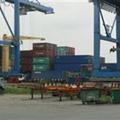
In early June 2009, Vietnamese export companies and shipping firms heard the good news that the Cai Mep deep water port complex in Ba Ria-Vung Tau was open.
Cai Mep opening applauded
Cai Mep port is capable of receiving medium-scale container ships of 3,000-7,000 TEU. A lot of shipping firms immediately docked their containers ships at the port: APL brought 4,250 TEU, MOL 5,350 TEU and Hanjin 4,000 TEU.
Cai Mep port lessens the total time to ship goods from Vietnamto the USto only two or three days, because ships can go directly to the USinstead of stopping in Hong Kongor Singapore.
Before Cai Mep was put into operation, goods went to Hong Kongor Singaporeand then were transferred to bigger ships heading to the US. The longer itinerary of export goods cost Vietnamese exporters more money and they had to endure high risks during the shipping, loading, and re-loading of goods.
Dr. Thai Van Vinh, a shipping expert and lecturer at AustralianTasmaniaUniversity, said that Cai Mep has obviously brought benefits to many involved parties, most especially to Vietnamese exporters.
The more favorable sea route has also brought more opportunities. Importers prefer placing orders with businesses that can provide direct shipping.
Infrastructure still poor
Professor Michael Porter, at a HCMCityworkshop in late 2008, suggested that Vietnamshould prioritize logistics development in its plan to develop the national economy.
Yet Vietnamhas not done so, according to Ngo Thanh Minh, Head of MGC Institute of Logistics.
An estimated 800-900 enterprises provide logistics services, but most are newly established and thus remain weak financially and in capability. These companies hold 25 percent of the logistics market share, while the remainder is covered by foreign firms.
According to Nguyen Tuan Hoa, a member of the HCMCitylogistics development projection team, most ports in Vietnamare small, while only 14 out of 150 ports are considered as medium-scale, including Hai Phong, Cat Lai and VICT. HCMCityports with the largest volume of goods every year are situated on rivers.
In 2009, the total volume of goods passing through Vietnam’s ports was 4.8 million TEU. Of that number, 3.4 million TEU (70 percent) came through ports in HCMCity.
According to Hoa, Vietnamloses $1.7 billion every year to carry export goods via transit ports. On average, enterprises spend $400 more to take roundabout routes. The figure may be double or triple if import goods are counted.
Experts have pointed out that poor infrastructure has made logistics fees of Vietnamese businesses much higher than that of other countries.
In the US, logistics expenses are equal to 9.5 percent of the GDP. The figure is 11 percent in Japan, 16 percent in South Korea, 21.6 percent in China, while it is very high in Vietnam, at 25 percent, or $17-18 billion per annum.
“Vietnamlacks deep water ports to receive big ships, but has other, redundant ports.” Hoa explained. “Meanwhile, international trade keeps growing by 20-25 percent per annum.”
|